Still Haunted: How Dead Aesthetics Refuse to Stay Buried
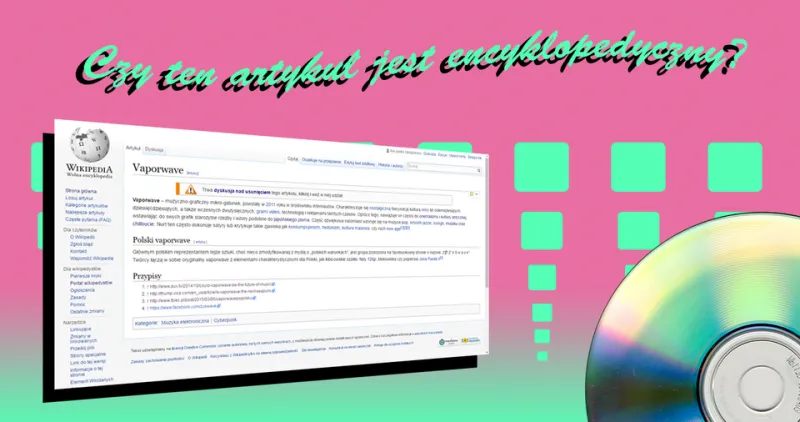
Photo: Kazachstanski nygus, Public domain, via Wikimedia Commons
Open TikTok on any given Tuesday and you'll find a 19-year-old in a thrifted flannel and smudged eyeliner captioning their video "soft grunge era." Scroll a little further and somebody's Midjourney prompt is clearly channeling 2012 vaporwave — the neon gradients, the Roman busts, the deliberate JPEG compression that made everything look like a corrupted memory. These aesthetics are, by any reasonable measure, dead. And yet here they are, breathing.
This isn't nostalgia in the traditional sense. Nostalgia implies you lived through something and miss it. A lot of the people resurrecting these visual languages weren't even in middle school when they first circulated. What's happening is something closer to archaeology — digging up an old way of seeing the world, brushing it off, and deciding it still has something to say.
The question is: why these aesthetics? What makes vaporwave exhumable when, say, the mid-2000s MySpace glitter graphic era mostly stays buried? Why does witch house keep reappearing as a reference point while seapunk — its roughly contemporary cousin — barely registers outside of very specific corners of the internet?
The Anatomy of a Survivable Aesthetic
Not all dead aesthetics are created equal. Some have what you might call structural longevity — a visual grammar complex enough to be reinterpreted rather than just copied, and vague enough in its original meaning to absorb new context without breaking.
Vaporwave is the clearest example. At its peak (roughly 2011–2014), it functioned as a kind of ironic autopsy of mall culture and late capitalism — all that pastel excess and smooth jazz rendered in pixelated grief. But the visual language itself was flexible enough to outlive the specific critique. A 20-year-old in 2024 can pull the same imagery and use it to express something completely different — nostalgia for a decade they didn't experience, aesthetic pleasure divorced from irony, or just a vibe that photographs well. The form survived because it wasn't locked to a single meaning.
Soft grunge works similarly. The look — oversized flannels, band tees for bands you may or may not actually listen to, smudged liner, a general air of decorative melancholy — was never really about anything specific enough to expire. It's mood-first, content-second. That makes it endlessly recyclable.
Compare that to seapunk, which was hyper-specific: aquatic color palettes, a very particular relationship to early internet culture, and an ironic posture so calibrated to a specific moment that it curdled almost immediately when it got mainstream attention (Rihanna's SNL performance in 2012 is often cited as the moment seapunk effectively died). There wasn't enough loose thread to pull. When the joke stopped being funny, the whole thing collapsed.
The Archaeology Gets Faster
Here's where it gets interesting from a cultural cycles perspective: the gap between an aesthetic's death and its resurrection has been shrinking noticeably.
Witch house — that murky intersection of occult imagery, chopped-and-screwed production, and Tumblr-era darkness — peaked somewhere around 2010–2012. Its first serious revival cycle started around 2018–2019, roughly six or seven years later. That used to be considered a pretty fast turnaround. By the standards of, say, 70s fashion cycling back in the 90s, it was practically instant.
But now we're watching aesthetics get excavated within two or three years of their supposed death. Cottagecore, which crested around 2020, was already being referenced as a past aesthetic by 2022 — and by 2023, people were doing nostalgic cottagecore content unironically. The cycle has compressed to the point where something can be born, peak, die, and become a retro reference point within a single presidential term.
A lot of this is platform-driven. TikTok's algorithm has a particular appetite for named aesthetics — the more clearly labeled a look is, the more easily it gets categorized, recommended, and eventually oversaturated. That oversaturation speeds up the death phase. But it also seeds the resurrection phase, because all that content stays indexed. Future excavators have better tools.
What Gets Distorted in the Remix
Every time a dead aesthetic gets picked back up, something gets lost in the translation — and something new gets added. That's not necessarily a problem. Cultures have always worked this way. But niche communities are increasingly self-aware about the process, which creates a strange recursive quality to modern aesthetic revival.
When a Gen Z creator does "witch house aesthetic" content, they're usually not engaging with the original music or the specific subcultural context that generated the look. They're engaging with the image of that context — the symbols without the syntax. The result is something that looks like witch house but functions differently. It's aesthetic cosplay rather than subcultural inheritance.
Some original community members find this annoying. Others find it flattering. A few find it genuinely interesting — watching a visual language they helped build get repurposed in ways they couldn't have predicted. The 92 Circles perspective on this is probably the most honest one: it's all of those things simultaneously, and the discomfort is part of the cycle.
The Aesthetics That Stay Buried
For every vaporwave, there are dozens of visual languages that don't make it back. The reasons vary but usually come down to one of three things: the aesthetic was too tied to a specific technology that no longer exists, too dependent on a specific platform's mechanics, or too legible as a joke to survive being taken seriously.
Flash animation aesthetics from the early 2000s — the Newgrounds era — have seen some revival, but it's limited and mostly ironic. The look is too associated with a dead plugin and a dead platform to fully detach from its context. You can reference it, but you can't really inhabit it.
Similarly, a lot of early Vine-era visual humor has no second life because the jokes required the six-second format to land. Strip that away and you have content that looks like a non-sequitur. The medium was the aesthetic.
The Graveyard Is a Library
The most useful way to think about defunct aesthetics might be as a kind of cultural library that niche communities maintain informally, without really meaning to. Every abandoned Tumblr blog, every archived subreddit, every YouTube channel that stopped posting in 2013 is a primary source document.
The communities doing the most interesting work right now are the ones treating those documents seriously — not just sampling the surface visuals, but actually asking what those aesthetics were for and what they were responding to. That's a harder question, and it usually leads somewhere more original than straight revival.
The cycle doesn't really end. It just gets another layer. Vaporwave becomes a reference. The reference becomes a new aesthetic. The new aesthetic peaks, dies, and waits for someone to dig it up in five years and ask what it means now.
Somewhere in a Discord server that'll probably move in about 18 months, somebody's already planning the excavation.