Count the Chairs: Reading the Early Warning Signs Hiding in Empty Rooms
Before the drama, before the 'is it dead?' discourse, the numbers already know. Attendance is the most honest signal in any scene — here's how to read the curves in yours.
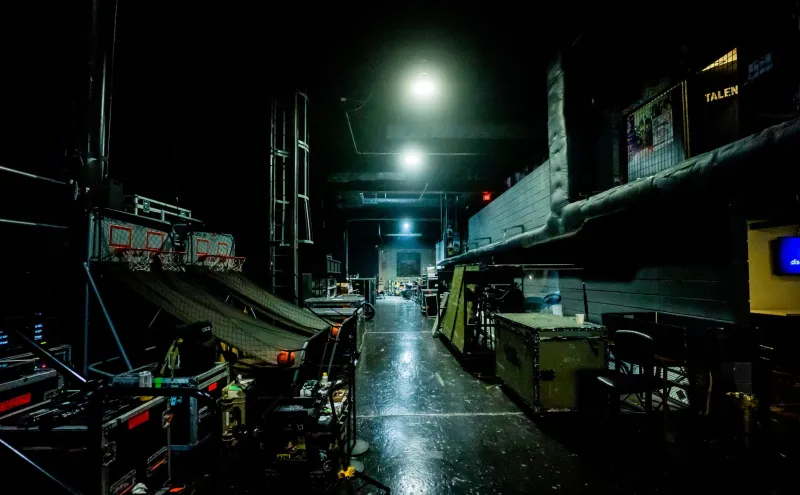
Where niche culture moves in cycles.
Before the drama, before the 'is it dead?' discourse, the numbers already know. Attendance is the most honest signal in any scene — here's how to read the curves in yours.

Basement shows, 40-seat black box theaters, private Discords with 30 members — the places culture actually gets made never make the news. Here's why the smallest rooms keep winning, and why they're built to stay small.
Every cycling subculture, from regional rap scenes to 40-member Discords, runs on the same five personalities. Find the archivist, the gatekeeper, the host, the skeptic, and the prodigal — and you've found the whole engine. Yes, you're one of them.
Most underground scenes never outgrow the basement they started in, and the numbers suggest that's not failure — it's design. We talked to the promoters and organizers who turned the plateau into a feature.
Every niche scene runs on a rulebook nobody wrote and nobody will admit to reading. We talked to scene veterans about how newcomers absorb the invisible codes — and what happens the day the rules stop working.
Niche communities have quietly turned the act of waiting into the product itself — and nobody seems to mind. From Discord invite queues to merch drops that sell out before most people even load the page, artificial scarcity has become the culture. The question is whether anyone's actually enjoying what's on the other side.
A leaked demo, a blurry bootleg tee, a fan-made wiki with 4,000 edits and no monetization — somehow these things become the most important artifacts in a niche community's universe. The psychology behind preserving what was never supposed to survive is weirder, and more human, than you'd think.
Most niche favorites are trapped in a loop they didn't design — cycling back through revivals, reboots, and reunion tours until the whole thing collapses under its own weight. But every so often, something breaks the pattern entirely. Here's what that actually looks like, and why it almost never happens.
There's a specific kind of fan who doesn't just expect disappointment — they put it on the calendar. Inside the strange comfort of knowing exactly how and when your favorite niche community is going to let you down, and why that certainty feels better than hope.
Niche fans have a ritual they'd never admit to: loudly despising a reboot, then quietly becoming its most devoted audience. The cycle from skeptic to believer is so predictable you could set a clock to it — and yet it keeps catching everyone off guard.
Niche fans are some of the sharpest critics alive — until a revival of their dead favorite shows up. Then they open their wallets anyway, fully aware of what's coming. The psychology behind this loop is darker and more fascinating than the cash-grab itself.
Every tight-knit underground community runs on the same quiet contradiction: the secrets that hold it together are the same ones slowly draining it dry. The moment a scene stops gatekeeping, it loses its identity. The moment it keeps gatekeeping too hard, it loses its people.
Niche communities have always had barriers to entry — that's kind of the point. But somewhere along the way, those barriers stopped being about passion and started being about money. When the cost of belonging outpaces the enthusiasm of newcomers, the community doesn't protect itself. It just slowly turns into a very expensive ghost town.
There's a breaking point hidden inside every niche creator's rise — the moment the numbers start climbing is often the exact moment the original crowd starts heading for the exit. It's not jealousy, it's geometry. When the circle expands, the center disappears.
Every niche community eventually hits a point where it stops growing outward and starts cracking inward. The splinter groups get smaller, the rules get stricter, and the original circle barely recognizes what it spawned. So is this just how the internet evolves, or are we watching something quietly collapse in real time?
Niche communities have quietly perfected a ritual that looks like accountability but functions more like theater. Creators apologize, fans forgive, and then the whole cycle spins back around — usually within eighteen months. Nobody seems able to stop it, and honestly, nobody seems to want to.
Unfollowing a creator feels like closure, but for niche community members it rarely is. The cycle of devotion, distance, and return is less about indecision and more about how fandom actually breathes. It's not a bug in the system — it's the whole operating system.
Every tight-knit niche community seems to have one — a villain they love to hate but never actually defeat. Turns out, that's not a bug. It might be the whole operating system.
Every tight-knit underground scene has a secret ingredient nobody puts on the flyer: a common enemy. Whether it's mainstream dismissal, rival fandoms, or think-piece pile-ons, the backlash aimed at niche communities often does more structural work than any amount of positive press ever could.
Conventional wisdom says the second time around is always a little worse — the magic diluted, the energy borrowed. But in niche communities, the opposite keeps proving true. The second wave isn't a pale imitation; it's often where the real thing actually starts.