Garbage Into Gospel: How Niche Communities Turn Throwaway Culture Into Sacred Objects
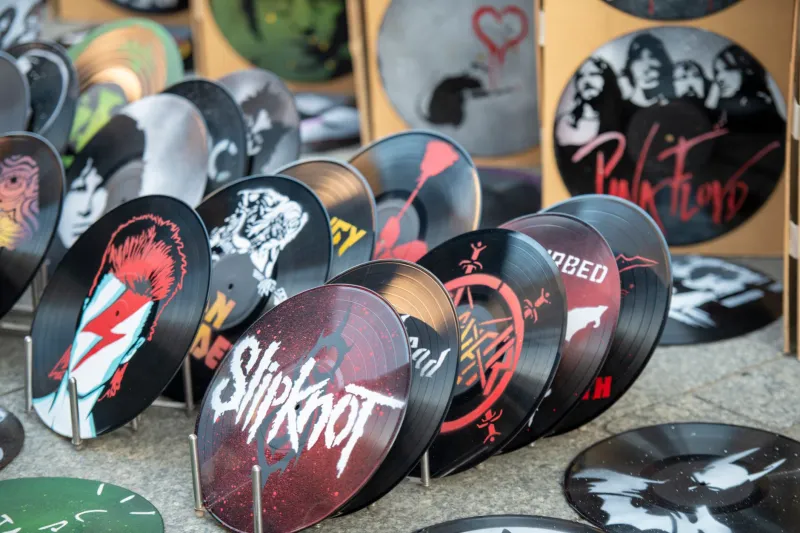
There's a Discord server out there — you probably can't find it unless someone already trusts you enough to drop the invite link — where members have spent the last three years cataloging every piece of merch from a mid-2000s emo label that folded before most of them were old enough to drive. Bootleg shirts from regional shows. Photocopied zines that were stapled together in someone's basement. A CDR demo with a hand-drawn cover that was only distributed to maybe 40 people at a Warped Tour side stage in Ohio.
None of it was designed to last. All of it has.
This is the artifact effect — the strange alchemy that happens when underground communities decide that something disposable is actually irreplaceable. It's not unique to one scene or one format. You'll find it in old-school gaming forums cataloging unreleased ROM builds, in K-pop fan archives preserving deleted tweets and livestream screenshots, in hip-hop communities trading lossless rips of mixtapes that were originally distributed free on DatPiff before the links went dead. The object almost doesn't matter. What matters is the decision — conscious or not — that this thing deserves to exist longer than the world intended.
Why Ephemeral Feels More Real
Here's the paradox at the center of all of it: the more something was designed to disappear, the more weight it tends to carry inside niche spaces.
Think about official releases for a second. They're permanent by design. The label pressed 10,000 copies. The album's on streaming. It's not going anywhere. There's no urgency to that. But a demo that leaked from a Tumblr that got deleted in 2013? A set of photos from a show that only 200 people attended and nobody filmed properly? A piece of fan art that the original artist scrubbed from their portfolio when they pivoted careers? That stuff carries a different charge entirely. Its scarcity isn't manufactured. It's real.
Psychologically, what's happening here overlaps with what researchers sometimes call the endowment effect — the tendency to assign more value to things simply because they're yours, or because you had to work to get them. In niche communities, the labor of finding and preserving something becomes part of the object's meaning. You didn't just download it. You rescued it. That reframes the whole relationship.
The Archive as Act of Defiance
There's also something genuinely political — lowercase p — going on when a community decides to preserve what the mainstream threw away.
A lot of niche cultures exist in direct tension with the idea that their tastes, their references, their whole aesthetic universe is somehow minor or unserious. When a major label drops an artist, or a platform kills a format, or an algorithm buries a genre, the implicit message is: this didn't matter enough. The act of archiving is a direct argument against that verdict.
Fan-made wikis are maybe the clearest version of this. Take any mid-tier cult property — a short-lived animated series, an indie game that sold 30,000 copies, a webcomic that ended on a cliffhanger — and you'll often find a wiki with hundreds of pages, obsessively detailed, cross-referenced, updated years after the source material went cold. Nobody commissioned that. Nobody's getting paid. It exists because a small group of people decided that the thing mattered, and they were going to prove it through sheer accumulation of detail.
That's not just fandom. That's a counter-archive. A community saying: we're keeping the record because no one else will.
What Gets Saved and What Gets Lost
Of course, the artifact effect isn't neutral. Communities make choices — sometimes unconscious ones — about what counts as worth preserving, and those choices shape how the history of a scene gets written.
Bootleg merch from the headliner gets cataloged. The opener's stuff gets forgotten. The leaked demos from the signed act circulate forever. The bedroom producer who influenced them stays unknown. Fan wikis tend to center the most visible figures in a community, which means the margins stay marginal even inside the preservation project.
This is where the cycle gets complicated. Niche communities often form around a shared sense of being overlooked by the mainstream — and then reproduce their own version of that hierarchy internally. What gets treated as an artifact worth saving, and what gets treated as just more noise, ends up reflecting the same dynamics the community thought it was escaping.
The most interesting archives are the ones that push against that — the ones that deliberately chase the peripheral stuff. The opening band. The regional variant. The fan translation. The version that came before the version everyone knows.
The Collector and the Community
One more thing worth sitting with: there's a tension between the individual collector and the community archive that doesn't always resolve cleanly.
Some people who hold rare artifacts — a one-of-a-kind piece of merch, a recording that doesn't exist anywhere else — function almost like custodians. They share freely, they document, they treat the object as something that belongs to the culture rather than to them personally. Others hold on tight. The rarity becomes personal capital. Gatekeeping dressed up as stewardship.
You see this play out in real time on forums and servers when someone teases a rare find without actually sharing it, or when a collection surfaces as part of an estate sale and the community has to scramble to figure out who gets to be the next keeper. The artifact carries all the weight the community put into it — and sometimes that weight gets heavy enough to cause real friction.
None of that makes the impulse to collect and preserve any less meaningful. If anything, the conflict around it is proof of how much these objects actually matter to the people involved. You don't fight over things that don't count.
The Relic Doesn't Know It's a Relic
That CDR demo with the hand-drawn cover from the Ohio Warped Tour side stage? The person who made it probably doesn't know it's being traded on a Discord server in 2024. They made it to get through the weekend. It was a functional object. It was supposed to be disposable.
But niche communities have a way of deciding otherwise — of looking at something the world was ready to let go of and saying, not yet. That instinct, repeated across thousands of scenes and subcultures, is how underground culture actually survives. Not through official preservation. Not through institutional memory. Through the collective refusal to let the cycle close all the way.
The loop stays open. The artifact keeps circling. And somewhere in a folder on someone's hard drive, the thing that was never supposed to last keeps lasting.