Nothing Lasts, and That Was the Point: Eulogizing the Rooms That Made Us

Photo by Photo by Nicholas Green on Unsplash on Unsplash
There's a specific kind of grief that doesn't have a name yet. It's what you feel when you pull up to a house in a college town and realize the basement where you saw your favorite band play to eleven people is now a rental listing with 'updated kitchen' in the headline. Or when you type the name of a Discord server into your search bar and the invite link just... dead-ends. No funeral. No plaque. Just gone.
Here at 92 Circles, we think about cycles a lot — and nothing cycles harder than the temporary spaces where niche culture actually gets made. The venues that matter most are the ones engineered to vanish. ## The Venues With Expiration Dates
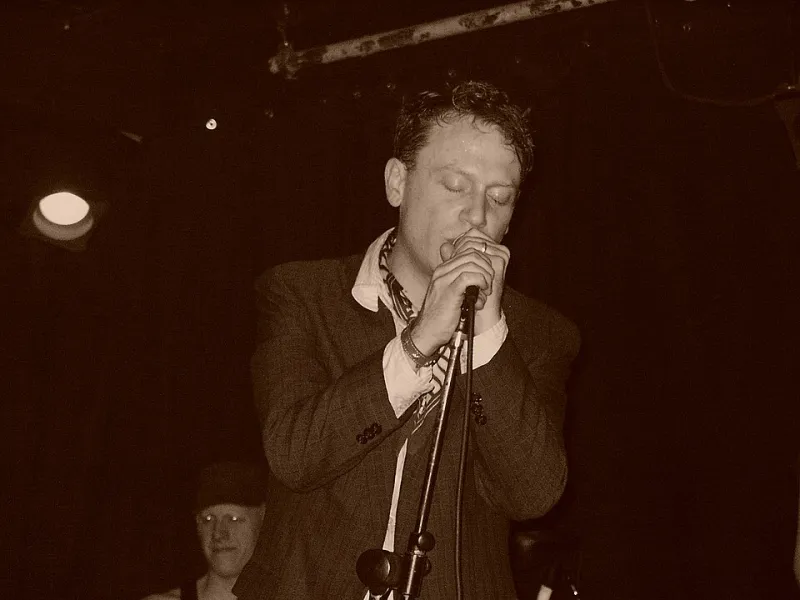
Think about the places that shaped you. The house show circuit that ran through a rotating cast of living rooms because nobody wanted to be the one address the cops knew about. The pop-up arcade that took over a vacant strip mall storefront for six weeks and then evaporated. The Discord server with 40 members that existed for exactly one game's golden window before the mod log disappeared into nothing.
None of these were supposed to last. That wasn't a bug — it was load-bearing architecture. A space that knows it's temporary operates differently. Nobody's protecting a brand. Nobody's managing liability. The person booking the show isn't worried about whether it scales; they're worried about whether the amp works and whether someone's roommate is okay with strangers peeing in their bathroom.
Impermanence lowers the stakes and raises the intensity at the same time. It's the cultural equivalent of a fire sale: everything must go, tonight, and tonight only. ## Why You Can't Recreate a Room You Missed
The obvious response is: just do it again, right? Book another show. Spin up a new server. But ephemeral spaces resist resurrection in a way permanent venues don't, and it's not just nostalgia fogging the lens.
A temporary scene works like a chemical reaction that only runs at a certain temperature. The right 30 people happened to be unemployed, 22 years old, and living within walking distance of each other at the same moment. The band was unsigned. The rent was cheap. The algorithm hadn't found you yet. Change any one variable and the reaction fizzles — change all of them and you get something that looks similar from the outside but feels hollow on the inside.
This is why reunion shows so often disappoint, and why the 'revived' Discord is never the same. You're not rebuilding the room. You're rebuilding a replica of the room, staffed by people who now have jobs, mortgages, and a protective awareness of how rare that moment was. Knowing it's rare is fatal to it. ## What Happens to the People Who Were There
Here's the part nobody talks about: when the room dies, the people don't scatter evenly. They redistribute, like heat.
Some become archivists, hoarding flyers, setlist photos, and screen recordings of a stream nobody else bothered to save. Some become scouts, carrying the taste they developed in that room into every new space they enter, quietly deciding which of the next generation's scenes pass the smell test. And some become the saddest category — the ones who keep orbiting the coordinates where the room used to be, posting in a dead channel like leaving a light on for someone who isn't coming home.
The healthiest ones do something else entirely: they build the next temporary room. They've internalized the lesson the space taught them, which is that you don't get to keep it. You get to host it. ## The 92% You Can't Photograph
We'd estimate that around 92% of what made those nights great is unrecoverable — the smell of the basement, the specific joke that only landed because everyone present had been inside the same eight-week conversation, the feeling that you'd found something before it was findable. The remaining 8% is what survives: a grainy video, a shirt, a memory you bring up at parties until your friends beg you to stop.
That ratio might be the most important math in niche culture. The permanent venues — the arenas, the official servers, the verified accounts — capture the 8%. The temporary rooms hold the 92%, precisely because nobody thought to preserve them.
So the next time you're crammed into a living room, or a three-week pop-up, or a group chat that everyone knows will be dead by spring — pay attention. You're not at a placeholder waiting for the real venue. You are at the real venue. And the fact that it won't exist in six months isn't the tragedy.
It's the ticket price.