Coming Back Wrong: Why Niche Fans Dread the Return More Than the Goodbye
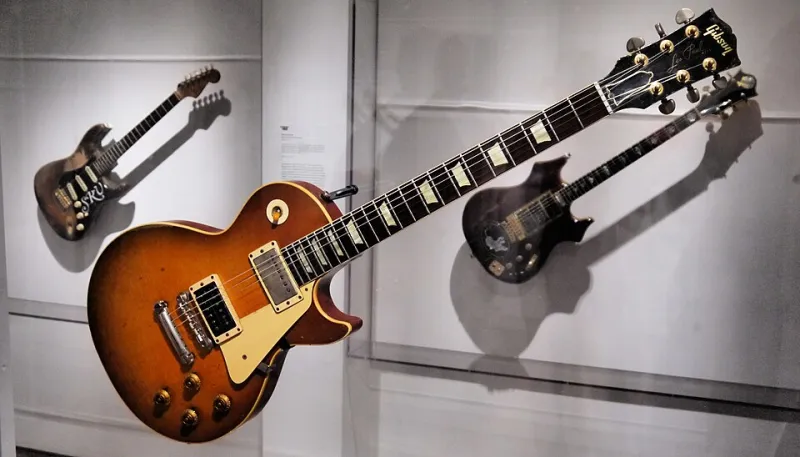
Photo: Eden, Janine and Jim from New York City, CC BY 2.0, via Wikimedia Commons
There's a specific kind of dread that settles into a niche community's group chat the moment the announcement drops. Not the dread of loss — they already survived that. This is something quieter and more complicated: the dread of return.
When a beloved-but-dormant band posts a cryptic image on Instagram, or a cult-favorite creator resurfaces after three years of silence, or an aesthetic movement that had been lovingly archived suddenly gets a mainstream reboot, the first reaction from the people who actually stuck around isn't excitement. It's a kind of held breath. A collective oh no.
And that response deserves a closer look, because it tells us something real about how niche communities actually work — and why the circle of revival is sometimes the most dangerous one to complete.
The Artifact Problem
Here's the thing about something going dormant inside a tight-knit community: it doesn't just disappear. It fossilizes. The original album, the old forum threads, the aesthetic that defined a specific weird corner of Tumblr circa 2013 — all of it gets preserved in amber by the people who loved it most. And over time, that artifact stops being a piece of media or culture and becomes something more like a shared identity.
When you've spent years defending an obscure post-hardcore band to people who've never heard of them, or curating a corner of the internet around a niche visual aesthetic that most people dismissed, the thing you're defending slowly becomes you. Your taste. Your community. Your proof that you were paying attention when nobody else was.
The dormant thing is safe in that amber. It can't disappoint you. It can't evolve in directions you didn't choose. It just sits there, exactly as good as you remember it being, available for reinterpretation whenever the community needs it.
A comeback shatters the amber. And whatever crawls out is never quite the same shape as what went in.
Nostalgia Is a Group Project
One thing that gets missed in most conversations about fan disappointment is how collaborative nostalgia actually is. Inside a niche community, the memory of a beloved thing gets refined and negotiated over years. People argue about which era was the best. They build consensus around which deep cuts were underrated. They collectively decide what the thing meant.
By the time a revival happens, the community hasn't just been waiting — they've been actively constructing an idealized version of what they're waiting for. The returning band or creator is walking into a room where the crowd has already written the reunion album in their heads, track by track.
No actual reunion album wins that competition. It can't. The imagined version had infinite time and zero creative constraints. The real version had label pressure, lineup changes, personal growth, and the simple fact that the people making it are different humans than they were a decade ago.
That gap — between the community's collaborative mythology and the artist's present-day reality — is where most revivals go sideways.
The Ownership Question Nobody Wants to Have
There's an uncomfortable truth lurking underneath all of this, and niche communities are usually too polite to say it out loud: during the dormant years, the fans started to feel like they owned the thing.
Not legally. Not even consciously, most of the time. But when you've been the primary keeper of a cultural flame — writing the fan wiki, running the Discord, introducing new people to the catalog, doing the emotional labor of keeping the community alive — you develop a sense of stewardship that starts to blur into something that feels like authorship.
When the original creator returns and makes choices that don't align with what the community built in their absence, it doesn't just feel like a bad album. It feels like a violation of something. Like someone redecorated your house while you were at work.
This is the reunion album paradox in its sharpest form: the people most invested in the return are the ones most likely to feel betrayed by it, because they had the most to lose.
When the Revival Actually Works
It's not all doom and spiraling Discord arguments, though. Some comebacks land. And the ones that do tend to have a few things in common.
First, the returning artist or movement acknowledges the gap honestly. They don't pretend nothing happened or try to pick up exactly where they left off. They treat the dormant years as real time that passed for everyone involved — including the community.
Second, the revival adds something genuinely new instead of just replicating the original formula. The best reunion albums aren't nostalgia products. They're conversations between who the artist was and who they became, and they invite the listener into that tension rather than papering over it.
Third — and this is the part that gets overlooked — the community has to be willing to let the thing change. That's genuinely hard. It requires loosening the grip on the amber-preserved artifact and accepting that the living version will be messier, less perfect, and maybe more interesting.
Communities that can make that shift tend to come out of revivals stronger. The ones that can't usually fracture into two camps: the purists who declare the comeback a betrayal and retreat further into the archive, and the newcomers who arrived via the revival and have no idea why everyone's so upset.
The Circle Nobody Asked For
At 92 Circles, we talk a lot about how niche culture moves in cycles — how things disappear and resurface, how the wheel keeps turning whether communities want it to or not. The revival cycle is one of the trickiest rotations in that wheel, because it looks like a gift but often functions like a stress test.
A comeback forces a community to answer questions it had been comfortable avoiding. Who are we without the thing itself? What were we actually attached to — the art, or our version of it? Can we welcome new people without losing what made this ours?
Those are hard questions. And the fact that a reunion album or an aesthetic revival triggers them isn't a sign that something went wrong. It's a sign that the community was real enough, and deep enough, to have something worth protecting in the first place.
The fear of the comeback isn't irrational. It's the sound of people who care too much — which, in a world that mostly doesn't care at all, is its own kind of beautiful problem to have.