Why Your Favorite Online Community Probably Has About 90 Days Left

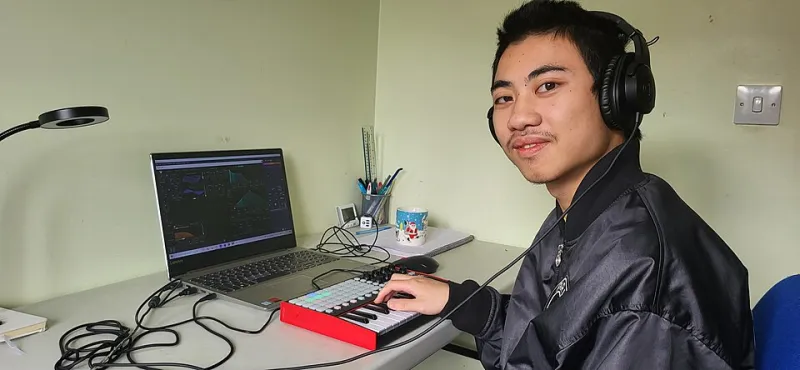
Photo: Keerthan Y U, CC BY 4.0, via Wikimedia Commons
The Clock Starts the Moment Someone Posts 'Welcome'
There's a particular kind of energy that comes with discovering a new online community at exactly the right moment. The inside jokes are still forming. The hierarchy hasn't calcified. Everyone's equally lost and equally excited. It feels like something.
And then, roughly 90 days later, it doesn't.
This isn't cynicism — it's closer to a pattern. Across Discord servers, Reddit subreddits, Facebook groups, and TikTok comment ecosystems, researchers and community managers have started noticing a consistent lifecycle that peaks somewhere between week eight and week twelve before hitting one of three fates: fragmentation, dormancy, or — in rare cases — transformation into something sustainable. At 92 Circles, we've been watching these cycles long enough to start mapping them, and what we found is equal parts fascinating and kind of sad.
The Anatomy of a 90-Day Arc
The lifecycle tends to move in four recognizable phases, and they're almost clockwork.
Phase 1: The Ignition (Days 1–15). Something sparks the community into existence. Maybe it's a viral moment, a niche interest that suddenly got mainstream adjacent, or a charismatic creator who rallied a following around a specific aesthetic or idea. Membership spikes. Engagement is chaotic and high. Everyone is a contributor because there are no real rules yet.
Phase 2: The Bloom (Days 16–45). This is the golden window. Content quality peaks, cross-pollination with adjacent communities drives discovery, and the group develops its own language — memes, terminology, shared references. For Discord servers, this is when the channel list explodes. For subreddits, this is when the mods start pinning things. The community feels alive.
Phase 3: The Compression (Days 46–75). Hierarchy emerges, and not always gracefully. Power users start gatekeeping. Newcomers get a lukewarm reception. The original spark gets diluted by volume. On TikTok, this looks like the sound or format getting overused until the algorithm buries it. On Reddit, it's the wave of low-effort posts that veterans complain about in meta threads nobody asked for.
Phase 4: The Fracture or Fade (Days 76–90+). The community either splinters into smaller, more focused groups — each carrying a piece of the original DNA — or it simply quiets down. Posts slow. The Discord goes from 400 daily active users to 40. The subreddit posts every few days instead of every few hours.
The cycle doesn't always land exactly on day 90, but the clustering around that window is consistent enough that it's worth taking seriously.
Case Study: The Rise and Scatter of Cottagecore
Cottagecore is a useful example because it's well-documented and because it actually survived — sort of. The aesthetic, centered on romanticized rural life, foraging, linen clothing, and soft lighting, exploded on Tumblr and then migrated to TikTok and Instagram around 2020. Within about three months of its peak visibility, the original tight-knit communities had splintered into sub-aesthetics: dark academia, goblincore, fairycore, and a dozen others.
Was that death? Not exactly. The fracture preserved the energy by redistributing it. Each splinter community went through its own 90-day cycle. Some faded. Some are still quietly active. The original cottagecore tag on TikTok still gets posts, but it's ambient now — background noise rather than a living culture.
This is actually one of the healthier outcomes. The community didn't die; it evolved into an ecosystem.
The Communities That Beat the Clock
A small number of online communities have managed to avoid the fade entirely, and they tend to share a few specific traits.
Structured creative output. Communities built around making things — music, art, writing, code — tend to outlast communities built around discussing things. When there's a reason to keep producing, people keep showing up. The r/WeeklyBeatChallenge music production community has maintained consistent engagement for years because the creative prompt resets the cycle every seven days.
Rotating leadership. Communities where mod roles, featured-creator spotlights, or event hosting responsibilities rotate among members stay fresher longer. When the same five people run everything, the community starts to feel like their personal project rather than a shared space.
External anchoring. Some communities survive because they're tied to something that keeps updating — a game with regular patches, a TV show with new seasons, an artist who keeps releasing music. The external content resets the internal engagement cycle before it can fully exhaust itself.
Intentional off-ramps. This one sounds counterintuitive, but communities that acknowledge their own impermanence — that explicitly say "this is a space for people into X right now" — tend to have longer active lifespans than communities that try to be everything forever. Constraints create focus.
What the 90-Day Pattern Actually Tells Us
The cycle isn't a bug. It might be closer to a feature.
Online communities serve a specific social function: they let people find their people during a particular moment of interest or identity formation. When that function is fulfilled — when you've made your connections, absorbed the culture, and moved on — the community has done its job. The fade isn't failure. It's completion.
The communities that try to resist this by artificially inflating engagement through drama, controversy, or manufactured events tend to extend their lifespans in ways that aren't actually good for anyone involved. You've seen this. The Discord that keeps itself alive through interpersonal conflict. The subreddit that becomes a grievance machine because that's the only thing still generating comments.
Sustainable communities aren't the ones that refuse to complete the cycle. They're the ones that learn to restart it — to find new entry points, new creative prompts, new members who bring fresh energy before the old cycle fully exhausts itself.
Reading the Signs
If you run a community or care deeply about one, there are a few early indicators that you're entering Phase 3. Post frequency is high but comment engagement is dropping. The same handful of users are responsible for most of the content. New members join but don't post. The vibe conversations — the ones about what the community is and what it's for — start happening more often.
None of these are death sentences. They're signals that the cycle is turning, and that it might be time to deliberately introduce something new: a challenge, a format shift, a collaboration with an adjacent community, or just an honest conversation about what the space is becoming.
The 90-day pattern isn't a trap. It's a rhythm. And like any rhythm, once you hear it, you can start playing with it.
At 92 Circles, that's kind of the whole point.