Round Two Hits Harder: The Weird Science Behind Second-Wave Niche Scenes
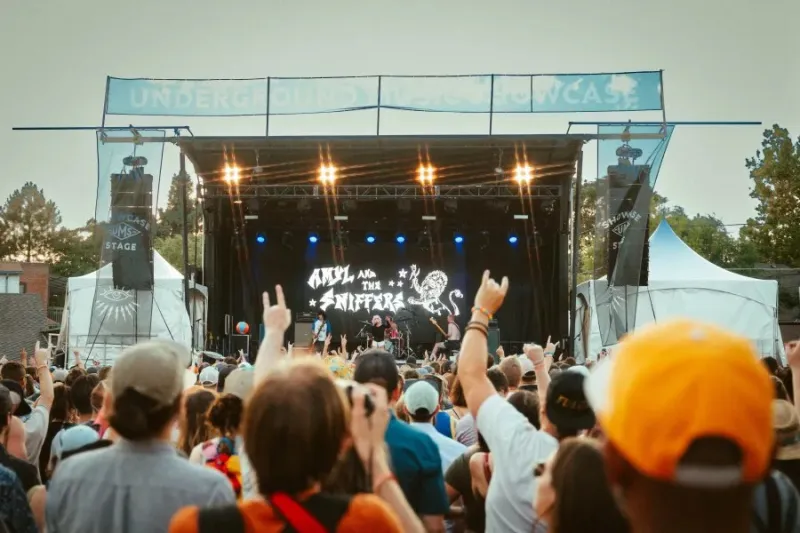
Photo: niche community gathering underground music event second chance, via s.yimg.com
There's a story we tell ourselves about how good things work. First wave breaks through, raw and accidental. Second wave shows up polished, calculated, and somehow lesser for it. The sophomore slump is practically a law of nature at this point — musicians choke on their follow-up albums, TV shows lose the plot in season two, sequels disappoint. We've been trained to expect it.
Except niche communities keep breaking that rule. Quietly, repeatedly, and in ways that don't always make headlines.
In tight-knit scenes — the kind built around hyper-specific music subgenres, obscure gaming communities, underground fashion aesthetics, corners of the internet that only 4,000 people know about — the second iteration doesn't just survive the slump. It frequently outperforms the first. Not in raw numbers, necessarily, but in depth, cohesion, and the kind of staying power that turns a moment into a movement.
So what's actually going on here?
The First Wave Is Beautiful Chaos
When something niche catches fire for the first time, the energy is electric but unstable. Discovery is doing most of the heavy lifting. People are stumbling in from all directions — some genuinely invested, some just tourists, some who will disappear the moment the next shiny thing appears. The community is growing fast but it doesn't fully know itself yet. There's no shared language, no established hierarchy of taste, no agreed-upon canon.
Think about the first wave of lo-fi hip hop as a serious listening community around 2017 and 2018. The aesthetic was everywhere, ChilledCow was racking up millions of streams, and the comment sections were full of people who'd never thought about music production in their lives. It was a genuine cultural moment. It was also, in retrospect, a little shallow — more vibe than substance for a lot of the people involved.
The second wave, which came quieter and later, brought people who had spent time with the genre. Producers who'd studied the sample-flipping techniques. Listeners who could tell the difference between a well-placed vinyl crackle and a lazy one. The community that formed around that second iteration was smaller in some ways but considerably more serious, and the creative output got sharper because of it.
Coming Back With a Map
Here's the counterintuitive part: the people who show up for a second wave already went through the first one. They know what they're walking into. They've processed the hype cycle, survived the oversaturation, and came back anyway — which means they came back on purpose.
That intentionality changes everything about how a community functions. There's less energy wasted on explaining the basics. The inside jokes are already established. The bad-faith participants have largely filtered themselves out. What's left is a group of people who genuinely want to be there, and that shared commitment creates a kind of density that first waves almost never achieve.
You see this pattern in gaming communities around cult-classic titles. A game launches, builds a mid-sized audience, gets overshadowed by something bigger, and fades from mainstream conversation. Then, two or three years later, a content creator revisits it, or a patch drops, or the game hits a new platform. The community that reassembles isn't starting over — it's picking up a conversation that was interrupted. The speedrunning strategies are more refined. The modding community has had time to actually build something. The lore discussions have depth that first-wave players never had access to.
The Fashion Parallel
Street fashion and underground style communities follow almost the exact same arc. A micro-aesthetic surfaces — workwear-influenced streetwear, for example, or the Y2K revival that was still simmering in niche Tumblr spaces years before it went mainstream. The first wave is chaotic and accessible but often derivative. People are figuring out the rules in real time, and a lot of what gets produced is exploratory at best.
The second wave, after the initial buzz dies down and the trend-chasers move on, is where the actual craft tends to emerge. Vintage pickers who've spent years sourcing. Designers who absorbed the first wave's mistakes and built something more considered. Style communities on Reddit or Discord that have had enough time to develop genuine taste and reject the watered-down versions.
The mainstream might not notice the second wave at all. That's often the point.
Why This Matters for How We Think About Cycles
At 92 Circles, we spend a lot of time thinking about how niche culture moves in loops — how things come back around, how the same energy resurfaces in new containers. The second-wave phenomenon fits neatly into that framework, but it also complicates the simple nostalgia narrative.
This isn't just about things coming back. It's about communities using the return as a chance to do it better. The first wave generates the raw material — the energy, the language, the initial creative output. The second wave is where that material gets refined into something with actual structural integrity.
It's the difference between a band's first record, which is exciting because it's new, and a band's second record, which is exciting because they've figured out who they actually are. When the sophomore slump doesn't happen, it's usually because the artist spent the gap between albums genuinely learning something. Second-wave niche communities work the same way — the gap between iterations is where the real development happens, even when no one's paying attention.
The People Who Stay Are the Ones Who Build
Maybe the most important variable in all of this is retention. Not growth — retention. First waves attract a lot of people. Second waves keep the ones who matter.
There's a specific type of community member who disappears between waves and comes back anyway. They didn't leave because they stopped caring — they left because the first wave got too loud, too diluted, too full of people who were there for the wrong reasons. The second wave is quieter, and that quiet is what calls them home.
Those returning members are almost always the most creatively generative people in the space. They're the ones who were building during the gap, thinking during the silence, and showing up to the second iteration with something real to contribute.
So the next time a scene you loved seems to be fading — the Discord going quieter, the subreddit slowing down, the content dropping off — don't write it off as a death. It might just be the inhale before the second wave.
And if the pattern holds, that second wave is going to hit considerably harder than the first.