The Monster You Need: How Niche Communities Invent Enemies to Avoid Falling Apart

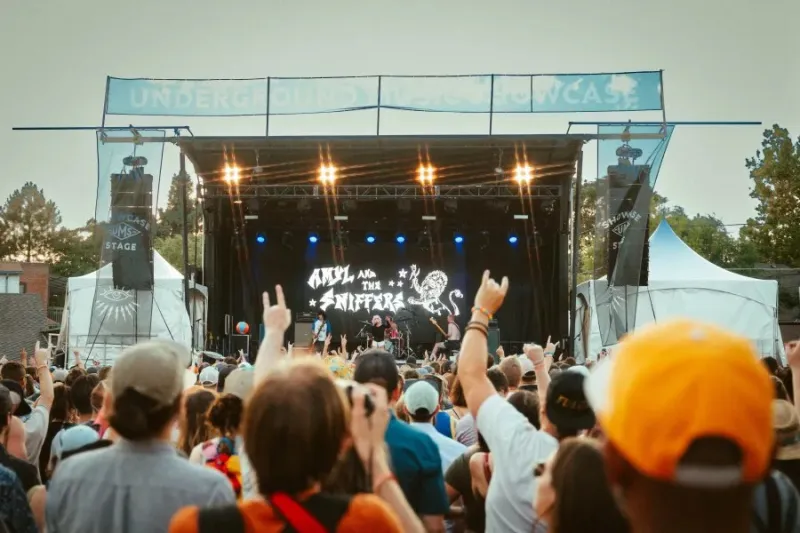
Photo by Photo by Aleksandr Popov on Unsplash on Unsplash
Picture any niche community you've ever been part of. A small music scene. A hyper-specific corner of Reddit. A Discord server built around something most people have never heard of. Now ask yourself: who were they against? Because there was always someone. A corporate entity. Mainstream culture. A rival subgroup two degrees removed. Some faceless "they" that the community defined itself against with surprising passion.
Here's the uncomfortable part — they probably needed that enemy more than they ever needed to beat it.
The Geometry of Us vs. Them
Niche communities are, structurally speaking, kind of fragile. They're built on shared taste, which sounds like solid ground until you realize taste is one of the most unstable substances on earth. People grow. Interests shift. The original thing that pulled everyone together starts to feel different to different people at different speeds. Without some external pressure holding the walls up, the whole structure tends to collapse inward.
Enter the villain.
It doesn't matter much what form it takes — the major label that signed someone away from the underground, the algorithm that "ruined" the feed, the casual fans who showed up after the Vice article dropped. What matters is that naming the enemy gives everyone something to agree on when they can't agree on anything else. The internal contradictions — the gate-keeping debates, the authenticity arguments, the "you weren't here when" hierarchies — all go quiet the moment there's an outside threat to point at.
This is what you could call the Alibi Effect. The enemy isn't just a target. It's an alibi. A reason to stay together that doesn't require anyone to actually resolve the tensions simmering underneath.
Real Threat or Narrative Device?
The honest answer is: usually both, in different proportions at different times.
Sometimes the threat is completely real. Corporate consolidation in independent music isn't imaginary — it's documented, it affects livelihoods, and communities that rail against it aren't wrong to be angry. When Spotify changed its royalty structure in 2024 and effectively cut payments to smaller artists, underground music communities had every reason to frame that as an attack on their world. The enemy was real.
But watch what happens after the immediate crisis fades. The enemy doesn't go away. It gets preserved, almost ritualistically, because losing it would mean confronting the stuff nobody wants to talk about. The producer who's been beefing with the community manager for eight months. The clique that controls which new members get welcomed and which ones get quietly frozen out. The founding mythology that stopped matching reality two years ago but nobody's allowed to say that out loud.
The external villain is a pressure valve. And communities that lose their villain — through victory, irrelevance, or simple forgetting — often find themselves suddenly, awkwardly forced to look inward. That's when things get messy.
The Specific Shape of American Niche Antagonism
In the US, this dynamic has a particular flavor. American niche culture has a long tradition of building identity through opposition to "selling out" — a concept so embedded in underground scenes that it basically functions as mythology at this point. From punk to hip-hop to indie film to zine culture, the mainstream has always been the monster at the gate.
But the mainstream keeps changing shape. In the 90s it was MTV. In the 2000s it was Clear Channel. Now it's the algorithm, the brand deal, the "creator economy" packaging that turns authentic expression into content. The specific monster shifts, but the narrative structure stays identical. Which tells you something important: the community probably isn't primarily trying to defeat the monster. They're primarily trying to stay a community.
There's nothing cynical about pointing this out, by the way. Humans have been doing this forever. Sports teams. Political movements. Religious communities. Shared opposition is one of the oldest social adhesives we have. Niche communities didn't invent the trick — they just run it in smaller, weirder circles.
When the Enemy Becomes Load-Bearing
The danger zone hits when the enemy stops being a rallying point and starts being structural. When a community can no longer function without something to be mad at. When every internal conversation eventually circles back to the villain, even when the villain isn't relevant to what's being discussed.
You see this in communities that have been around long enough to outlast their original antagonist. The major label that was the enemy folded. The platform they hated pivoted away from their space. The rival subgroup dissolved. Now what? Some communities adapt, find new friction, update the narrative. Others just kind of... freeze. They keep performing outrage at a threat that isn't really threatening anymore because the alternative — figuring out what they actually are without the contrast — feels too exposing.
The most self-aware communities are the ones that can name this out loud. That can say "hey, we're doing the villain thing again" and laugh at themselves a little without the whole structure collapsing. That takes a specific kind of maturity that not every niche scene develops. The ones that do tend to last longer, even if they're never quite as intense.
The Cycle Keeps Spinning
Here at 92 Circles, we spend a lot of time thinking about how niche culture moves in patterns — how the same dynamics replay themselves across different scenes, different decades, different platforms. The villain mechanism is one of the most reliable cycles in the whole ecosystem.
Community forms around shared interest. Internal tensions develop naturally. An external enemy gets identified and amplified. Cohesion holds, at least for a while. Enemy evolves, fades, or gets replaced. Cycle restarts.
The question worth sitting with isn't whether your community is doing this — it almost certainly is. The question is whether the enemy you've chosen is doing real work for you or just running on autopilot. Whether the anger is still connected to something genuine or whether it's become a habit, a ritual, a way of not having to ask harder questions about what you're all actually building together.
Because communities that ask those harder questions, even when it's uncomfortable, tend to build something that doesn't need a monster to hold it together.
The ones that don't? Well. They usually find a new monster. And the circle keeps going.