Every 5 Years or So, Your Obscure Favorite Genre Comes Back Around
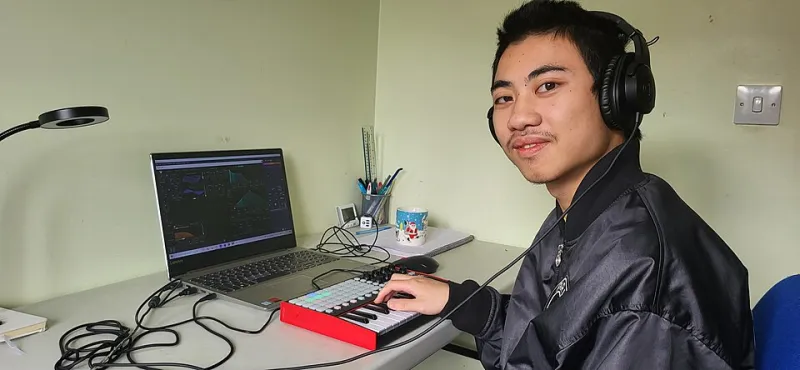
Photo: Des Byrne, CC BY 2.0, via Wikimedia Commons
Sometime around 2010, a loose collection of producers started chopping up smooth jazz samples and elevator music into something slow, hazy, and vaguely unsettling. They called it vaporwave, posted it to Bandcamp and YouTube, and mostly talked about it in comment sections that felt like private conversations. It was niche in the truest sense — a small circle of people who found each other and made something weird together.
Then it "died." Then it came back. Then it died again. Then it became an aesthetic template for an entire generation of graphic designers. Then it died again. And right now, in 2024, there are teenagers on TikTok discovering it for what feels to them like the first time.
This is not an accident. This is a cycle.
Why Microgenres Don't Actually Die
The conventional music narrative treats genre death as a real thing. A sound peaks, gets oversaturated, gets parodied, and then gets left behind as the culture moves on. And on the surface, that's true. You can watch it happen in real time — the moment a microgenre gets a think-piece in a major publication is usually about six months before everyone starts calling it over.
But "over" on the surface is different from gone entirely. The communities that built those genres don't disappear. They just shrink back down to a sustainable size and keep going. The Discord servers stay active. The Bandcamp pages keep getting a trickle of new listeners. The genre tag on streaming platforms keeps accumulating plays, quietly, without anyone writing about it.
What that means is that the raw material for a revival is always sitting there, waiting. It doesn't take much to reignite it. A single viral video, a well-placed playlist, one artist with a larger following deciding to cite an influence — and suddenly a genre that was "dead" is getting rediscovered by people who have zero nostalgia for the original wave because they were in middle school when it happened.
The 5-to-7 Year Window
Talk to producers who've been paying attention, and a pattern emerges. The gap between a microgenre's peak, its declared death, and its first significant revival tends to run somewhere between five and seven years. Long enough for the oversaturation to fade from memory. Short enough that the original artists are still around and can benefit from renewed interest.
Witch house — that murky, occult-adjacent electronic sound that peaked around 2010 to 2012 — started showing up in algorithm-generated playlists again around 2017, 2018. Hyperpop had a mainstream moment in the early 2020s and is already cycling back through underground communities who are treating it as archival material. Seapunk, which had maybe six months of genuine cultural visibility, has been quietly revived and re-revived multiple times in aesthetic communities that weren't around for the original.
The timeline isn't exact. But it's consistent enough that some artists are actually building it into their release strategies.
Artists Who Play the Long Game
There's a small but growing group of producers and artists who think about genre cycles the way some investors think about market timing. They're not chasing what's hot right now. They're watching what's dormant and calculating when it's likely to surface again.
The logic isn't complicated. If you release music that fits squarely into a sound that's currently oversaturated, you're competing with everyone else riding that wave. But if you release something that fits a genre that's about 18 months away from its algorithmic revival — when the nostalgia is building but the playlists haven't caught up yet — you get in early. The algorithm finds you when the wave arrives. You look ahead of the curve because, in a sense, you were.
This requires a genuine feel for the underground. You can't calculate it purely from data because the early signals live in spaces that don't generate much data — small Discord servers, Bandcamp comment sections, niche subreddits. The artists who do this well are usually deeply embedded in those communities. They're not outsiders timing a market. They're insiders who've noticed a pattern.
How TikTok and Algorithmic Playlists Changed the Speed
The 5-to-7 year cycle held pretty steady through the 2010s. But there's evidence it's compressing.
TikTok's recommendation engine is exceptionally good at surfacing sounds that create strong emotional responses, regardless of when they were made. A user in Ohio who's never heard of witch house can end up deep in a rabbit hole of 2011 releases within a single session, served up by an algorithm that noticed she paused on a particular kind of reverb-heavy aesthetic. That kind of cross-temporal discovery used to take years to happen organically. Now it can happen in an afternoon.
Algorithmic playlists on Spotify and Apple Music are doing something similar. Genre-tagged playlists pull from entire catalogs, not just recent releases. A playlist called something like "dark ambient electronic" might serve up tracks from 2009, 2015, and 2023 in the same session, flattening the timeline completely for the listener.
The result is that revival cycles are getting shorter and less predictable. A genre might get its rediscovery moment after three years instead of six. Or it might get multiple smaller revivals instead of one big one. The circle is spinning faster.
What This Means for How We Listen
There's something genuinely interesting happening to the relationship between listeners and musical history. For most of recorded music's existence, discovery was linear — you found out about something when someone told you about it or when media coverage pointed you toward it. The timeline of when something was made and when you encountered it were closely linked.
Algorithmic discovery breaks that entirely. A teenager finding vaporwave in 2024 isn't having a nostalgic experience. She has no nostalgia for 2010. She's just finding something that sounds good to her, right now, that happens to have been made before she had a smartphone.
That's not a lesser experience. It might actually be a purer one — music encountered without the weight of cultural context, just on its own terms.
For the artists who made those original records in small circles, releasing music to tiny audiences and mostly talking to each other, the idea that it's still circling back around to new listeners is kind of remarkable. The genre didn't die. It just completed a revolution and started another one.
That's the thing about cycles. They don't really end.