The Pull Back: Why Niche Fans Always End Up Re-Subscribing to the Creators They Quit

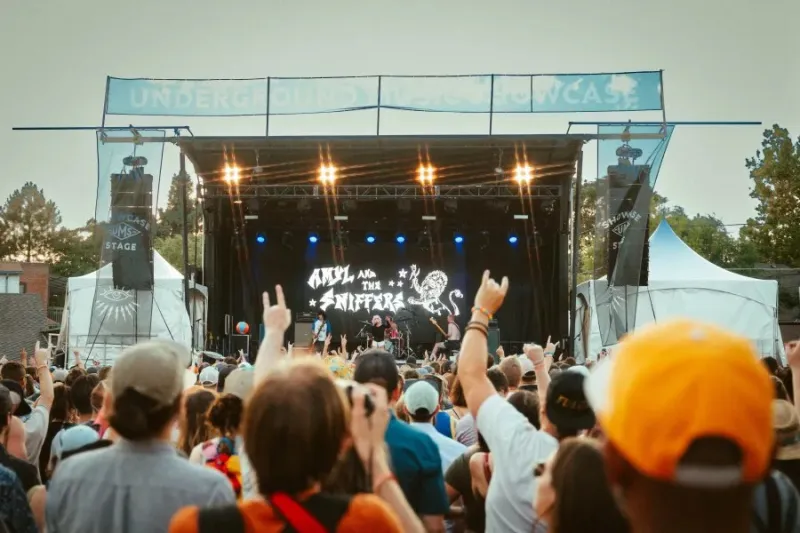
Photo by Photo by Dimitris Chapsoulas on Unsplash on Unsplash
The Pull Back: Why Niche Fans Keep Re-Subscribing to the Creators They Quit
You've done it. Maybe more than once. You hit unfollow — or unsubscribe, or mute, or whatever the platform calls it this week — and you felt something close to relief. A little lighter. Free from the parasocial weight of someone whose content had started to feel like homework. And then, six weeks later, you're back on their page, watching a three-year-old video like nothing happened.
This isn't embarrassing. It's also not random. For people embedded in niche communities — the ones built around obscure music scenes, hyper-specific hobbies, or creators with audiences measured in thousands rather than millions — this cycle of attachment and retreat is practically a calendar event. It runs on a rhythm that most fans never consciously clock, but almost all of them experience.
At 92 Circles, we think about cycles a lot. And this one? It's one of the most underexamined loops in all of modern fandom culture.
Why the Unfollow Feels Necessary
Let's start with the departure, because that's usually where the drama is. Niche fandom runs hotter than mainstream fandom, not because the stakes are higher but because the distances are shorter. When your favorite creator has 40,000 followers instead of 4 million, the relationship feels personal in a way that's hard to shake. They reply to comments. They remember inside jokes from two years ago. They feel like someone you actually know.
That closeness is the draw. It's also the problem.
When a creator pivots their content, shifts their personality on camera, starts chasing a broader audience, or just posts something that lands wrong — the betrayal hits differently than it would in mainstream fandom. You weren't just a consumer. You were, in some meaningful sense, a participant. So when the vibe changes, the natural impulse is to pull back hard. The unfollow isn't apathy. It's a reaction to perceived intimacy being broken.
There's also the burnout angle. Niche communities demand a lot from their members. Keeping up with a creator who posts constantly, engages in Discord threads, drops surprise content on random Tuesdays — it's genuinely exhausting. Sometimes the unfollow is less about the creator and more about the fan needing to breathe.
The Quiet Phase Nobody Talks About
Here's the part that gets skipped in most conversations about parasocial relationships: the time between the unfollow and the return isn't dead air. Something is happening in that gap, even when it looks like nothing.
Former followers don't fully disengage. They catch secondhand updates through community spaces. A friend mentions something the creator said. A clip surfaces on a subreddit. Someone in a group chat references a video. The creator stays present in the peripheral vision of the fan's online life, even without a direct subscription feeding the algorithm.
This ambient exposure does something important — it lets the emotional temperature drop without letting the connection go completely cold. The fan gets the distance they needed without losing the thread entirely. By the time they wander back to the creator's page, they're not starting over. They're resuming.
What Makes the Return Inevitable
Niche communities are built around specificity. The whole appeal is that this particular creator, this particular scene, this particular aesthetic speaks to something that mainstream culture doesn't touch. That specificity is also what makes substitution so hard.
When you unfollow a creator who makes content about, say, a hyper-regional music subgenre or an extremely particular corner of independent game design, you can't just replace them with someone else. There isn't someone else. The market for what they do is small by definition, and they've spent years building fluency in the exact language of your niche. Walking away from that is easier said than done.
So the return isn't really about the creator winning you back. It's about the fan running out of alternatives. The orbit might expand for a while, but the gravitational pull of something genuinely irreplaceable tends to win out eventually.
There's also the nostalgia accelerant. Niche communities have extremely long memories. An old upload resurfaces. A throwback post hits the community feed. Someone in the comments says "I remember when this dropped" and suddenly the version of the creator you fell for in the first place is front and center again — not the one who frustrated you into leaving, but the one who made you subscribe in the first place.
The Creator Side of the Loop
It's worth acknowledging that creators who operate in niche spaces often understand this cycle better than their audiences do. The smart ones don't panic when they see subscriber counts dip after a pivot or a controversial post. They've watched enough of their own analytics to know that the people who leave are frequently the same people who come back.
Some creators actually build for this rhythm, consciously or not. They'll go quiet for a stretch, let the audience breathe, then drop something that feels like a return to form — a video that callbacks to early content, a post that signals "I remember what we built here." The re-engagement isn't accidental. It's an invitation timed to when the distance has done its work.
This isn't manipulation, exactly. It's more like understanding that fandom in a small community operates on seasonal logic. There are phases of intensity and phases of recession, and trying to maintain constant peak engagement is a good way to burn out both the creator and the audience simultaneously.
The Loop Is the Relationship
Here's the reframe that changes how you look at the whole thing: the cycle isn't a sign that something is broken. It's proof that the relationship has actual depth.
Casual audiences don't unfollow and return. They just drift away and never come back, because there was never enough investment to generate the friction in the first place. The fans who go through this push-pull pattern are the ones who cared enough to leave and cared enough to return. That's not inconsistency — that's a relationship that's actually doing something.
In mainstream fandom, parasocial bonds tend to be one-directional and relatively stable. You watch the big YouTuber, you enjoy the content, you move on. In niche communities, the bond is more reciprocal and more volatile — which means it's also more alive. The unfollow is part of the conversation. So is the return.
If you've re-subscribed to someone you swore off, you're not weak-willed. You're operating exactly the way niche fandom is designed to operate. The circle closes, it opens, and then — because this is how it works — it closes again.
See you back on their page in six weeks.