Tuesday at 9PM: The Invisible Schedule Running Your Favorite Underground Community
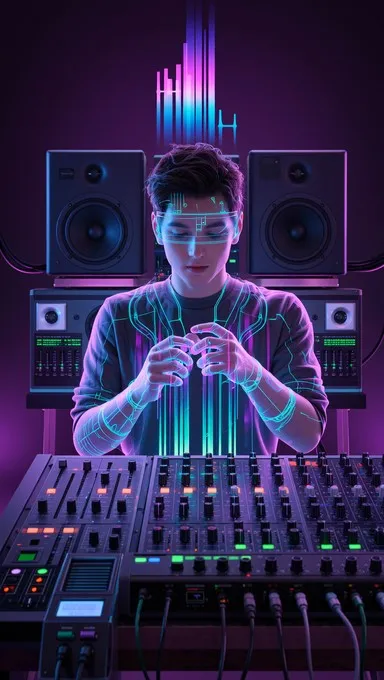
Photo: neon clock glowing music producer dark studio late night, via images.stockcake.com
The Beat Before the Beat
Every producer knows that a track has a grid underneath it — a tempo structure that everything locks to, even when it sounds loose and organic. The best stuff makes you feel the rhythm without obviously announcing it.
Niche online communities work the same way. There's a grid. You can't see it on any dashboard, and nobody wrote it down, but it's there — pulsing through Discord activity logs, Reddit comment timestamps, Twitch viewer counts, and the timing of posts that somehow always seem to land at the right moment.
This isn't mystical. It's behavioral. And once you start seeing the pattern, it's kind of hard to unsee.
Why Underground Spaces Have Rhythms at All
The mainstream internet runs on algorithmic prime time. Platforms optimize content delivery for peak engagement windows, and those windows are well-documented: evenings, weekends, the lunch hour scroll. Big creators and brands build entire content calendars around these slots.
Niche communities don't do that, at least not consciously. They're not following a content calendar. They're following life. And because niche communities tend to cluster around people with similar lifestyles — similar ages, similar work situations, similar cultural reference points — their life schedules sync up in ways that create predictable collective rhythms.
A Discord built around a specific subgenre of electronic music, for instance, might be mostly young adults in their mid-twenties who work day jobs. That shared life structure means they're all free at roughly the same times. They all have the same Monday morning drag. They all get the same Friday afternoon release. The community breathes in sync because the people in it are breathing in sync.
Mapping the Weekly Cycle
If you pulled the activity data from most niche US-based communities, you'd see something close to the same shape every week.
Monday is quiet. Not dead, but the energy is low. People are processing the transition back into work mode. Lurkers lurk. The people who do post are usually sharing something they found over the weekend — a late drop, a deep cut, a YouTube video that blew their mind at 2am Sunday. It's a slow feed day.
Tuesday and Wednesday are where things start activating. This is the underrated peak window that a lot of creators sleep on. The week has found its footing, people are in a rhythm, and there's a specific kind of focus energy that comes from mid-week. In music-adjacent communities especially, Tuesday has a particular charge because it's historically been the day new music drops in the US. That conditioning runs deep even in spaces that don't follow major label release cycles.
Thursday is the start of the pre-weekend lean. Conversations get looser. People start making plans, sharing recommendations, asking what's good. Community engagement metrics tend to spike here in recommendation-heavy spaces.
Friday evening is a hard peak for communities tied to listening, watching, or gaming — anything that people do as a leisure activity. The release valve opens and people flood in. But it's actually a complicated time to build conversation because everyone's doing their own thing and just broadcasting rather than dialoguing.
Saturday afternoon is arguably the richest window for deep community engagement. People are rested, there's no urgency, and they're more likely to write long posts, share detailed opinions, and actually respond to each other. This is when the real subculture discourse happens.
Sunday is melancholy hour. Engagement is real but the tone shifts. In music production communities, Sunday night is when people share works-in-progress — unfinished tracks, half-formed ideas — in a way they wouldn't earlier in the week. There's a vulnerability to Sunday that loosens people up.
The Creator Effect: How One Person's Schedule Anchors a Whole Community
In smaller niche spaces, a single consistent creator or moderator can actually set the community's rhythm by anchoring their activity to specific times. This happens more than people realize.
When a trusted voice consistently drops something on Wednesday evenings — a mix, a thread, a live stream, anything — the community starts unconsciously orienting to that cadence. People check in on Wednesdays. They start posting in anticipation. The rhythm becomes self-reinforcing.
This is actually a massive lever that niche creators underuse. You don't need a massive audience to create a temporal anchor. You need consistency and a community small enough that your presence is felt. In a 300-person Discord, one person posting thoughtfully every Tuesday night for six months will reshape how that community moves through the week.
Platform Architecture Shapes the Beat
Different platforms have different natural rhythms, and the communities that live on them adapt accordingly.
Reddit rewards consistency and timing in a specific way — posts have a lifecycle tied to upvote velocity, which means the moment you post matters as much as what you post. Communities on Reddit tend to have sharper peak windows and faster decay.
Discord is more like a live room. It rewards presence over timing. The rhythm there is less about when you post and more about when you show up. Communities develop a feel for when the room is alive versus when it's just background noise.
Twitch niche communities are almost entirely creator-schedule dependent. The community clock is set by stream times, and everything else — the Discord activity, the Twitter discussion, the clip sharing — orbits that anchor.
Substack and newsletter-based communities have the most intentional rhythm because the creator literally controls the timing of the signal. These spaces tend to have slower, more deliberate cycles — weekly or bi-weekly instead of daily — and the community engagement follows in measured pulses rather than constant flow.
What to Do With This Information
If you're a creator or community builder in a niche space, the actionable piece here is simple: stop posting whenever you finish something and start thinking about when the room is ready to receive it.
A track you share on a Monday morning will land differently than the same track shared on a Saturday afternoon. A question you post to a Discord at 11pm Friday will get different energy than the same question on a Wednesday evening. The content doesn't change. The timing does.
For community members who aren't creating, there's something just as useful here: knowing the rhythm lets you find your people at the right moment. If you want a real conversation rather than a broadcast, show up when the community is in dialogue mode, not performance mode.
The Grid Is Always There
Niche communities feel like they operate outside the mainstream clock. And in some real ways, they do — they're not chasing trending topics or platform algorithm peaks the way bigger accounts do.
But they have their own grid. Quieter, more organic, shaped by the actual lives of the people inside. Understanding that grid isn't about gaming the community. It's about showing up in sync with it.
The best producers don't fight the tempo. They find it, lock in, and then do something interesting on top of it. Same principle applies here. Find the beat your community is already on, and build from there.